Residential Rooftop Solar
1 kW to 10 kW on-grid systems for bungalows, row houses and apartments - subsidy application included.
Patan, Gujarat
Patan sits in the driest, brightest part of Gujarat, and that single fact does more for a rooftop plant's economics here than any hardware choice. North Gujarat records long cloud-free stretches from October through May, so a well-oriented array in Patan produces more units per installed kilowatt across the year than the same array on a coastal roof. For a household, that shortens payback without any change to the equipment list. The housing stock helps as well: Patan and the surrounding taluka towns are dominated by independent houses with flat, unshaded terraces and low parapets, which is the easiest roof type to design for - no lift rooms, no dense high-rise shadow, and enough clear area that a 3 kW to 5 kW array does not have to be split awkwardly across orientations. A home billing 300 to 550 units a month typically lands on a 3.3 kW to 4.4 kW system, and because PM Surya Ghar pays up to ₹78,000 against a residential connection, the subsidy covers a very large proportion of that installed cost. The commercial picture is different but equally straightforward. Patan's economy runs on textiles and handloom, agro-processing, ginning and small engineering units, most of which draw their heaviest load in daylight hours. Those connections are not subsidy-eligible - PM Surya Ghar is residential only - but they are frequently the stronger case in pure financial terms, because nearly every generated unit is self-consumed against a commercial tariff instead of being exported at a lower credit. Two local factors change the design rather than the price. The first is dust: North Gujarat's dry season deposits a fine film that measurably cuts transmission if cleaning is left to the monsoon, so a defined cleaning cycle belongs in the handover document rather than being left to chance. The second is heat. Patan summers routinely push ambient past 44°C and module output falls as cell temperature climbs, which means a plant designed only on datasheet conditions will underperform its own projection. We choose modules with a low temperature coefficient, keep clear air space under the array for convective cooling, and site the inverter somewhere shaded and ventilated instead of on a west-facing wall. Net metering across Patan district runs through UGVCL. The process is not complicated but it is unforgiving of incomplete files: the application, single-line diagram, module and inverter datasheets and installer credentials need to reach the correct sub-division office as one package, or feasibility approval bounces back and the meter appointment slips by weeks. We prepare and file that set ourselves. What we will not do is claim a local history we have not built: Patan is a newly opened service area covered on a scheduled project basis from our Ahmedabad base, and we say so before you book a survey rather than after.
Get up to ₹78,000 Government Subsidy on Solar Installation
Check Your EligibilityTell us about your property in Patan and we'll send system size, price and your ₹78,000 subsidy eligibility.
12+
Years installing solar in Gujarat
3,400+
Rooftops commissioned
25 Yr
Panel performance warranty
MNRE
Empanelled & GEDA registered vendor
Patan is covered on a scheduled project basis from our Motera, Ahmedabad base, on the same route as Mehsana, Kadi and Sidhpur. That works well for planned residential systems and for GIDC rooftops: the survey date is fixed in advance, and site measurement, structural inspection and shadow analysis are completed in a single visit before any written quotation is issued. Specification for Patan assumes a hot, dusty inland climate - low temperature-coefficient modules, generous clearance under the array, shaded inverter placement and a stated cleaning cycle rather than a vague maintenance promise. Send your pincode and the last twelve months of bills when you enquire and we will confirm coverage and a survey slot before quoting.
We install from Station Road and university-side homes to the Patan GIDC sheds and the Sidhpur Road belt. Locations served from this page include:
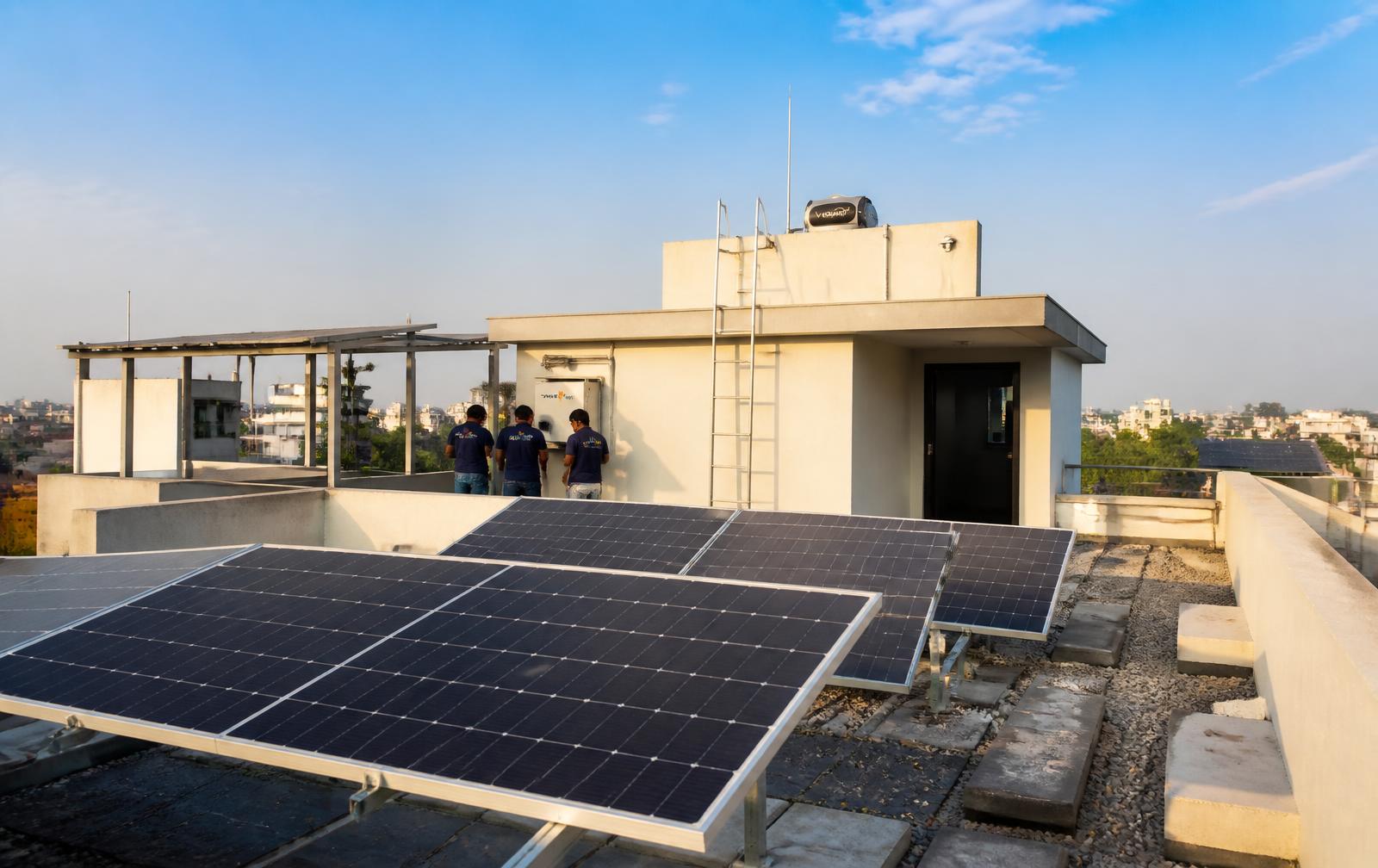
These are our three official quotation-backed rooftop packages. Prices are the same in Patan as everywhere else we work - only the roof survey, structure and cable run are site-specific.
6 Nos - 545/550/555W Mono Bifacial, Adani MNRE Approved
Final Cost After Subsidy
₹86,000
Small homes, monthly bill ₹2,000–3,000
Get This Quote7 Nos - 545/550/555W Mono Bifacial, Adani MNRE Approved
Final Cost After Subsidy
₹1,10,800
Medium homes, monthly bill ₹3,000–4,500
Get This Quote8 Nos - 545/550/555W Mono Bifacial, Adani MNRE Approved
Final Cost After Subsidy
₹1,36,500
Larger homes, monthly bill ₹4,500+
Get This QuoteSubsidy amount and eligibility are governed by the Government of India's PM Surya Ghar scheme guidelines and are subject to change. Final amount depends on DISCOM approval.
Extra cabling beyond 30 metres, DISCOM/net-meter charges and non-standard structures are billed as actual and shown in your written quotation before you sign.
Not sure which size fits? Use our solar cost calculator or read the full ₹78,000 subsidy breakdown.
One team for system design, supply, installation, net metering and subsidy paperwork - across Ahmedabad and nearby Gujarat cities. As a full-service solar EPC company in Ahmedabad we also handle commercial solar installation for factories, warehouses and offices, and quote the real solar panel installation cost in Gujarat before you commit.
1 kW to 10 kW on-grid systems for bungalows, row houses and apartments - subsidy application included.
10 kW to 1 MW+ plants for factories, showrooms, schools and hospitals with accelerated depreciation benefits.
Panel cleaning, inverter health checks, generation audits and breakdown support across Ahmedabad and Gujarat.
Net-metered on-grid savings, battery-backed off-grid for farms, or hybrid systems for outage-prone areas.
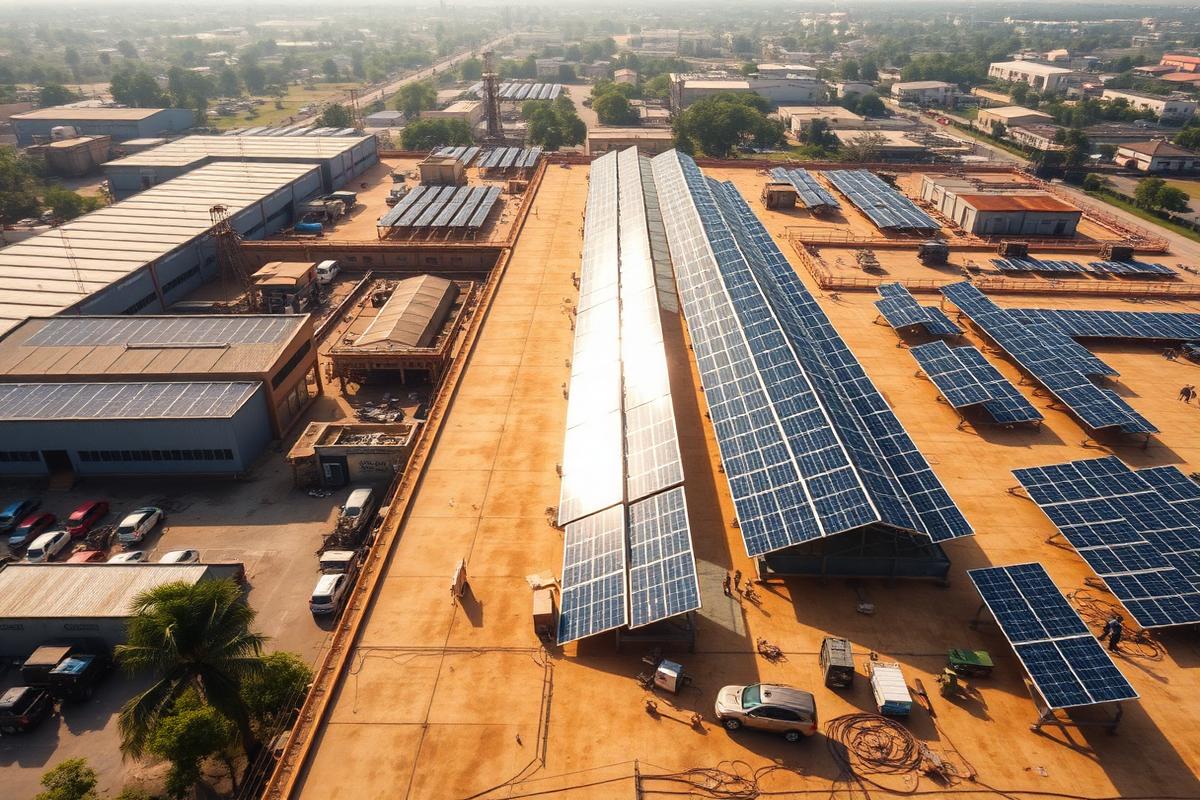
Tariffs, rooftops, weather and DISCOM process vary across Gujarat. Here is what our engineers plan for specifically in Patan.
Patan sits in one of the state's best irradiance belts, with long dry, cloud-free stretches from October to May. That produces more units per installed kilowatt than a coastal roof, but the annual figure still has to account for the monsoon dip and for dust losses. We size against twelve months of billing history rather than a peak-season number, so the generation estimate in your quotation is one you can hold us to.
Ambient temperatures above 44°C are normal in a Patan May, and module output drops as cell temperature rises. We select modules with a low temperature coefficient, maintain at least 150 mm clearance beneath the array for airflow, and place the inverter in a shaded, ventilated position. Those three decisions protect more annual yield than swapping between two comparable module brands.
The dry-season dust film in North Gujarat is fine and persistent, and it cuts transmission steadily rather than dramatically - which is exactly why it gets ignored. We set a recommended cleaning interval in writing at handover, design walkway access so cleaning does not mean standing on modules or sheeting, and can fold the cycle into an AMC if you would rather not manage it.
Net metering in Patan district is a UGVCL process. The delay most homeowners experience is not the utility being slow, it is a file returned for a missing datasheet or an unsigned drawing. We submit the application, single-line diagram, module and inverter datasheets and installer credentials as one complete package to the correct sub-division office, then track it through feasibility approval and the meter appointment.
Why solar makes sense here
Patan and the wider Gujarat belt receive roughly 5.5–5.9 kWh/m² of solar irradiance daily across nearly 300 clear-sky days. The same panel generates 10–15% more units here than in most Indian states.
With net metering, daytime generation runs your home and surplus units are exported to the grid against your bill. Most households drop from thousands per month to a fixed minimum charge.
Central government subsidy of up to ₹78,000 is credited straight to your bank account after DISCOM inspection, cutting the effective cost of a 3 kW rooftop system by nearly 40%.

Share your electricity bill on a call or WhatsApp. We calculate the right system size, subsidy and savings - no charge, no obligation.
Our engineer visits your rooftop, checks shadow-free area and structure, and gives you a fixed written quotation.
Tier-1 panels and mounting structures installed in 2–3 days, followed by net-meter application and DISCOM inspection.
Subsidy credited to your account, generation monitoring set up, plus scheduled cleaning and 25-year performance cover.
4.8 / 5 from 260+ reviews
"Bill went from ₹3,800 a month to under ₹300. The ₹78,000 subsidy was credited in about seven weeks and they handled every form with Torrent Power themselves."
"Two other vendors kept dodging questions about net metering. This team explained the whole UGVCL process on day one and finished installation in three days."
"Our unit's monthly power cost dropped by ₹1.9 lakh. Payback is tracking under three years including depreciation benefit. Cleaning crew visits every quarter as promised."
"Honest sizing advice - they actually talked me out of a bigger system I didn't need. Generation is exactly what they estimated after eight months."
Send your latest bill and we'll return an exact quote - system size, generation estimate, net cost after the ₹78,000 subsidy, and payback period.
Free site survey, no obligation.
Share a few details and our Ahmedabad team will call you back with an exact system size, price and your ₹78,000 subsidy eligibility.
Costs, subsidy, payback and maintenance questions we answer every day in Patan.
Local teams, local DISCOM paperwork. Pick your city for pricing and subsidy details.